
Blog

  • How Do We Manage Data In A World Of AI? Parliamentary Group Sets Out The Challenges Ahead

    How Do We Manage Data In A World Of AI? Parliamentary Group Sets Out The Challenges Ahead

    Artificial Intelligence, or AI, is well and truly among us, and the rise in this technology has seen many great advances in every industry. While certainly bringing advantages to the world, AI also comes with its complications, one of which is data management and privacy.
    Recently, the All-Party Parliament Group held an intriguing debate on Artificial Intelligence, which covered some important and challenging topics.

    The All-Party Parliamentary Group (APPG) Artificial Intelligence Evidence Event

    The theme for the event held on Monday 24th February, was Beyond GDPR. It saw a panel of experts from across various academia, commercial, and legal professions partake in a fascinating discussion. The APPG event was chaired by Lord Clement-Jones CBA and was set out to look at the implications of privacy, data ownership, and user rights in a future powered by artificial intelligence.
    During the debate, fundamental questions over how data can be used and owned going forward were asked and talked through in detail.
    Policy Fellow and Policy Theme Lead at The Alan Turing Institute, Dr Folrian Ostmann, observed that companies now need reassurance and clarity over data privacy laws going forward. He said that the key challenge now was to guarantee that consent for GDPR is both informed and meaningful.
    Consumers also need reassurance that their personal information and data is only going to be used in a beneficial way by these advancing technologies.

    Ethically Harnessing Health Data

    One of the key discussions of the artificial intelligence event was how the value of health data can be harnessed ethically. The UCL Institute of Health’s Research Data Manager, Dr Kenan Direk, revealed his thoughts on the ethics surrounding health data and planning health provisions in the future. He went on to talk about how when health data is used effectively, it can deliver great value to general public health.
    However, in order for that power to be used effectively, there must be meaningful engagement and total transparency with the public over how the research is being used.
    The conversation went on to discuss the legal and commercial implications of regulations surrounding data. Tamara Quinn from Osbourne Clarke said that the majority of the businesses who are collecting data are not actually tech or AI companies, and the importance needs to be on providing clarity for these businesses so that they can make investment decisions appropriately.
    Current legal frameworks are struggling to keep up with all the implications that using health data has on individuals and public health. Even the process of anonymising health data under GDPR legislation can be a breach of GDPR in itself. These contradictions in the current laws on data privacy make it extremely challenging for businesses to comply. Many organisations see competitors not complying with GDPR, so it is challenging to persuade those companies to do the right thing.

    Employee’s Data Rights

    Since the UK’s exit from the European Union, the country has the freedom to bring in its own data regulation and employee’s rights. It was highlighted at the APPG event that there is a challenge in having free reign on data regulation while also ensuring the UK is aligned with Europe on a practical basis. Trade union Prospect’s Research Director, Andrew Pakes, discussed employers’ use of personal data in the workplace and the impacts that new technologies have on this. He went on to say there is a significant lack of framework on how employers are handling workers’ personal details.
    It is becoming clear that with the rise in artificial intelligence, there needs to be a concept of group rights as otherwise there is a risk that data will be used for decisions about individuals when there is no balance of power. Artificial intelligence is vital for the future of the workplace, but it is important that it is used properly, fairly, and safely.
    In many organisations, employees are not considered to have their own voice, and don’t get their own input on how their data is used.

    Value Of Data And How It Is Assessed

    The All-Party Parliament Group event went on to debate how data is currently assessed, how this needs to be adapted going forward, and the value of the data itself. Deputy Director at Hat Lab, James Kingston, spoke at the event about how the value of data is assessed. He explained that it could be considered a store of value, which only comes from the ability to drive transactions.
    The APPG was asked to take into consideration the ownership of data. One example given was self-driving cars and how they can generate extremely valuable data for insurance providers, but there are no clear cut guidelines on who owns that data. Data is the key to artificial intelligence technologies, and it contributes greatly to knowledge, but with data monopolies held by many firms, it makes it challenging for small ones to compete.
    Since its creation, the All-Party Parliamentary Group of Artificial Intelligence (APPG AI) has been exploring the implications and impact that AI will have. However, when technology in this sector is expanding so rapidly, there may need to be a faster process to manage the challenges before they arise.
    Regardless of its challenges, artificial intelligence is sure to be the way of the future, and knowledge in this area is extremely valuable to employers and highly sought after.
    AI Training Courses from TSG Training are an excellent way of developing these skills and expanding your knowledge in AI. Our Microsoft Azure AI Fundamentals course provides a good introduction to concepts related to AI and Azure.
    The BCS Foundation Course in Artificial Intelligence is ideal for those who already have a basic understanding of AI or have completed the essentials certification and want to expand their learning even further.
    For more information on our artificial intelligence training courses or to discuss your training requirements in detail, contact our team today.
  • Should We Fear Or Embrace AI Video Analytics?

    It is no secret that the opportunities for artificial intelligence (AI) are endless, and AI is becoming increasingly utilised in day-to-day lives. One of the biggest emerging trends is the progress of AI video analytics.
    Using CCTV and other videos, AI video analytics uses machine learning to make sense, analyse and provide deeper information for visual images. We can already see organisations utilising AI video in applications such as:

    • Facial recognition
    • Sports tracking
    • Fault detection in factory lines
    • Healthcare procedures and surgical operations
    • Brand and media recommendations/targeting
    • Safety and security applications

    For such a vast range of applications, there are many different AI video systems, and each will offer a different way to process images. Some of the technologies the systems can use include:
    Object detection: This can recognise objects in an image or video and correctly mark the items. Analytics can stretch further by also counting the items, localising them, identifying them and registering their exact positions.
    Trigger alerts: This type of analytic is ideal for detecting unusual behaviour to help improve situational awareness. For example, there may be count-based alerts when a capacity is reached. They can issue a similarity warning when there are cases of appearance resemblance, which may require a surveillance response. Alternatively, facial recognition alerts can identify offenders and alert authorities in real-time.
    Object recognition: using deep learning and machine learning, AI can quickly learn to spot objects to identify them and the surrounding visual information for greater understanding and analysis.
    Object tracking: As well as recognising objects, there are technologies to track objects throughout video frame sequences. An example of this is tracking football players during a match to provide statistics on their performance, e.g. kilometres travelled and successful passes.
    With these technologies, the system will then apply deep learning, statistics, pattern recognition and neural networks, or a combination of these, which can help detect, identify, classify, track, retrieve data and forecast.
    With endless potential, there is a stark divide between those excited by the future of AI and others that have concerns. This is especially true when considering the challenges that can arise from the masses of data needed for deep learning. So, is AI analytics something we should fear for the future or something that can deliver a whole new level of benefits across a huge range of applications?

    The Benefits Of AI Video

    With its deep learning potential, AI video can offer a considerable array of benefits. For a start, the complex algorithms these systems can utilise mean that the whole process is incredibly comprehensive.
    Instead of requiring human resources, AI analytics can track a huge range of video surveillance systems or video streams at one time. What’s more, these systems can review each image pixel by pixel. The scale and convenience of this can far outweigh the alternative of human analysis.
    What’s more, as the system continues to learn and process more data, it improves its accuracy and ability, meaning that it can be applied to a greater number of applications while also potentially requiring less human intervention.

    The Challenges Of AI Analytics

    Data collection

    In order to conduct the deep learning that make these systems so effective, they require a huge amount of data. This data needs to be provided, and some feel there are challenges around safe and consensual obtaining of the data.

    Data storage

    Due to the huge volumes of data, there are challenges around storing this data safely. Cloud-based solutions become essential for volume, but in regards to consent, some data may need to be stored in an organisation’s location. For AI contractors to organisations, it may mean organisations have to have a dedicated IT security team to safely manage data storage.
    Another challenge with this is GDPR and ensuring all data meets the necessary GDPR compliance. In some cases where video analytics are used for statistics, alerts or anomaly insights, GDPR may not be a concern. However, GDPR consent will have to be considered for individual-specific insights such as customer recognition.

    Cyber security

    There is a growing number of cases regarding IT hacking and threats to cyber security. As data increases with AI deep learning, there is a greater risk of large-scale internet breaches, which can threaten your operations, systems and customer data. This can have a huge effect on businesses and create a negative brand image.

    Human input

    The other main challenge for AI is that it requires human input to grow and develop. Human resources will be needed to handle the knowledge AI video analytics can provide, as well as improve deep learning with human input.
    AI training is essential for teams to effectively utilise AI video systems and make the most of the data they can process. At TSG Training, we help organisations to see the exciting future ahead for AI, but also the challenges organisations need to consider.
    To find out more about how our AI training courses can support your business with greater data analysis and enhanced experiences, get in touch with our team today to find the right training course for you.

  • AI Continues DevOps Expansion

    AI Continues DevOps Expansion

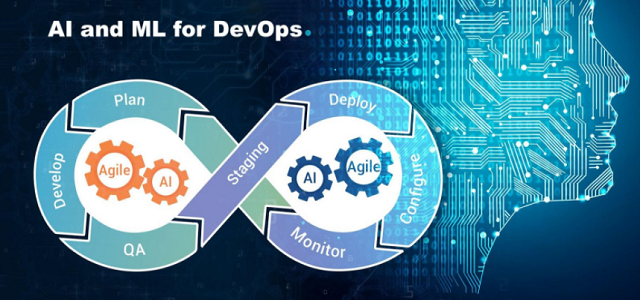
    Artificial Intelligence gives us the ability to clear out the clutter and just focus on the bits of data that are truly valuable. It is an effective and popular solution for targeting complex IT tasks, and DevOps is a great example of this.
    Many companies are seeing success when they use machine learning techniques to analyse their source code. It is clear that artificial intelligence is only going to further DevOps expansion.

    The Companies Using AI For DevOps

    Swedish business CodeScene is currently using artificial intelligence and machine learning in order to review source code in great detail. They can offer their clients the ability to analyse version control metadata over a set time frame and determine any areas in the code where more attention should be paid.
    This is just one excellent example of how artificial intelligence is continuing to develop the world of DevOps.
    Another company to watch is Haystack Analytics, which are making waves in mining GutHib data in order to boost the quality of software, optimise processes, and remove bottlenecks. They are helping development teams to avoid getting bogged down in the details and delivering subpar quality work by using data to identify any weak points.
    Their solutions can analyse the delivery funnel in detail and use AI to find the underlying cause of problems which the development team can then address appropriately.
    GitLab recently announced that the business has acquired UnReview, a developer that is using machine learning technology to automatically identify the right code reviewers. GitLab is making plans to use this technology as part of its own DevOps platforms.
    According to their research, three out of four DevOps workers are using artificial intelligence technology or machine learning as part of their testing process or are planning to use it in the near future.

    How AI Is Improving DevOps

    Developers have been speculating on the next big thing for the world of DevOps for years. It is an industry that is constantly evolving and is prone to rapid change, and the rise of artificial intelligence has only added to this.
    Some believe that artificial intelligence and machine learning tools are beginning to replace the role of a developer in a new trend known as AIOps. While we are still some way away from AI taking over DevOps completely, this technology has certainly expanded the field. Here are just a few ways that artificial intelligence is changing DevOps:

    • Automation

    Artificial intelligence can be used to create various automated code development and deployment techniques, which can automate some of the fundamental processes of DevOps. Many developers are able to use AI tools to keep on top of the complex systems they are working with, through automation.
    These automation techniques and the use of AI in DevOps don’t just make life easier for developers, but they also bring new possibilities to the projects being developed. AI systems are able to work incredibly quickly and tailor scenarios to specific individuals.

    • Scale

    The majority of DevOps teams are now running multiple different clouds, and artificial intelligence interfaces have become somewhat of a necessity for developers to scale and evolve their DevOps programmes.
    Developers spend a lot of time looking into data and at various systems, and machine learning technology has been able to take on a lot of these mundane tasks effortlessly. Allowing DevOps teams to scale more effectively than ever before.

    • Speed

    Artificial intelligence is already having a massive impact on both the speed and the quality of the software being produced by DevOps teams. GitLab conducted some recent research by surveying more than 4,000 developers and found that many companies are releasing new code up to 10 times faster than they were previously.
    75% were using artificial intelligence and machine learning for reviewing and testing their code in pre-release, which is 40% more than one year ago.

    The Challenges Of AI In DevOps

    Artificial intelligence is certainly bringing many advantages to the world of DevOps, but there are certainly some challenges with this technology as well.
    It is easy to assume that developers would see their workloads decrease with machine learning tools being adopted throughout the development sector. Unfortunately, this is certainly not the case for most DevOps teams.
    They might be spending less time managing the day-to-day tasks for their software, but this saved time is then moved onto more valuable tasks. This often includes analysing development goals and strategic planning. Many experts imagined that the AI revolution would end up making DevOps obsolete, but those in the industry have soon realised these tools are great for assisting their roles, not replacing them.

    Artificial Intelligence Training

    Here at TSG Training, we are specialists in training courses for the software development industry. We offer a vast range of training courses, including AI and DevOps courses. Our artificial intelligence training can lead to certification and will include everything you need, including learning materials and tutor assistance. Some of our most popular AI courses include;

    • BCS Essentials In Artificial Intelligence: This beginner’s course is an excellent starting point for gaining AI certification. It covers the basics of artificial intelligence and machine learning technologies, and after completing the exam, students will be able to demonstrate that they have a basic knowledge in AI.
    • BCS Foundation In Artificial Intelligence: This foundation course is BCS accredited, which means it is recognised internationally. The course covers three days and is perfect for anyone interested in artificial intelligence or who needs to implement it in an organisation. It follows on from and builds on the information learnt in BCS Essentials In Artificial Intelligence.
    • Microsoft Azure AI Fundamentals: This course covers the fundamental concepts around artificial intelligence and Microsoft Azure. Learners will discover how the programme can be used to develop AI solutions. This training is not designed to teach students to become software developers but instead to build awareness of AI workloads and how Azure can support them.

    For more information on our training courses, contact us today.

  • Understanding AI And Human Interaction

    Understanding AI And Human Interaction

    Artificial intelligence is changing how our world works and having a huge impact on human interactions. University of Hertfordshire’s Jyoti Choudrie FBCS, a Professor of Information Systems, recently discussed this subject in detail with Johanna Hamilton AMBCS.
    The two are well-versed in the way information sources interact, and together they have explored the possibilities and limitations of artificial intelligence technologies.
    Before we dive into what came from this intriguing discussion, it is crucial to understand that artificial intelligence is not just a single technology. It is a blend of different technologies, including machine learning, deep learning, neural networks, and so much more. It all works together as a kind of information system, in a real mix of technology, processes, and people.

    AI Protecting And Preserving The Population

    Professor Choudrie has recently embarked on a project alongside two colleagues at the Symbiosis International University in India to address how artificial intelligence could benefit in the fight against misinformation during the COVID-19 pandemic.
    They worked together as a blend of both social scientists and technical professionals to discuss both the false and true information that was being circulated during the pandemic.
    Having incorrect or negative information circulating during the pandemic is enough to cost lives. Consequently, the general public was put in a difficult position where it was challenging to know who to trust. The internet was certainly alive with opinions, ideas, and facts, but knowing which were science-based and which were not was no easy task.
    This rush of incorrect facts pushed the World Health Organisation (WHO) to urge each country to take strong action against the spread of harmful information.
    It was coined the infodemic, and it soon became clear that it wasn’t just COVID that was a threat to public health but the misinformation that surrounded it. Choudrie and her colleagues in India focused on sharing information between themselves from major journalists, including the BBC, The Guardian, The New York Times and more. They used 143 articles and posts from around the world to train computers and algorithms to detect what was true and what was not.
    The outcome was that the artificial intelligence technology identified 81 posts as false information however it was inevitable that the computer would produce some false positives. This highlights one of the biggest concerns in artificial intelligence and machine learning, as even computer systems are unable to identify what is true and what is false.
    If the human brain struggles to make these identifications, then the computer being trained by these brains is going to come across the same struggles.

    AI And The Wider World

    As we have just discussed, artificial intelligence can be biased. To make sure that no bias was used in the results of AI experiments, Choudrie looked into the decision making of both the technology and the humans in the widest sense.
    She wanted to explore how AI will fit into society and who will it ultimately benefit. It was highlighted that who needs to decide the route for artificial intelligence and machine learning to take is still in early stages. The EU’s Shaping Europe’s Digital Future Policy Paper on AI says that the technology should be put ‘at the service’ of the European people and economy.
    The biggest issue with this policy paper is that putting AI at the service of the people is very ambiguous, and people, by nature, vary greatly. This led Choudrie to consider who will benefit the most from artificial intelligence and why.
    The research team decided to interview an older demographic on the subject because they are usually the most cautious about the new technologies coming to light. Older adults are not easily swayed by social media and are very much living in the real world with little technological influence. This research revealed that awareness is a critical problem when it comes to artificial intelligence.

    AI And Influence

    The older people used for this research were asked to validate the true and false statements in the various articles. It was soon made clear that computers being trained for AI are likely to be influenced by the person training them.
    For example, one article from China News was a true story, but the majority of the older adults who read it believed it was false. So, the artificial intelligence technology will be limited and swayed by what it is told.
    From here, Choudrie and her colleagues soon had many other questions about AI. Not just about its use in misinformation, but how accepting older generations are likely to be of this technology going forward. She went on to say that society is scared of robotics, machine learning and AI, but this was the case when computers were first introduced to the world.
    Choudrie, just like many others, believes that artificial intelligence will slow gain acceptance from society and become an integral part of our lives.

    Artificial Intelligence Training Courses

    It is clear to see that the world is progressing towards artificial intelligence dependence at a fast rate, and there is extreme demand for professionals working in this industry. At TSG Training, we are experts in training courses, including AI training, and can help you and your team develop your skills in this area.
    We have artificial intelligence training courses to suit all abilities, so whether you are completely new to the idea or have been working in machine learning for some time, we can help you progress your skills.
    Our Designing and Implementing an Azure AI Solution course can help software developers to learn how to build AI-infused applications using Azure Cognitive Services. The intensive four-day course is conducted in our virtual classroom and is ideal for those with prior knowledge of Microsoft Azure.
    If you are brand new to AI, we recommend our BCS Essentials In Artificial Intelligence Course, which gives a good overview and introduction to the subject. For more information or to discuss your training in detail, contact our team.

  • Artificial Social Intelligence: Where Next?

    Artificial Social Intelligence: Where Next?

    Technologies have come a long way in recent years, and today a computer is able to drive a car, write a film script, or play a game of chess. With so many possibilities coming from artificial intelligence and machine learning technologies, it leaves many wondering where this will end up.
    Despite its power, the future of artificial intelligence is not guaranteed. Just because something works well in one culture does not mean it will translate correctly to another, and this is the social side of artificial intelligence.
    A phrase that is thrown around a lot in the world of artificial intelligence is that “when a human makes a mistake, one person can learn, but when an AI makes a mistake, all future AIs can learn.”.
    This might make perfect sense on the surface, but experts are questioning whether this statement will always be true, and if it is not, then in which cases will it hold up.
    The recent developments in artificial intelligence are undoubtedly impressive, with recent examples of a film script being written entirely using AI technology. It is being used to push the boundaries of imagination. Furthermore, new achievements like this are certainly groundbreaking and pave the way for the future of artificial intelligence.
    Using AI to play a game of chess or other mental strategy games is one thing, but AI is now seen as a robust solution for countless activities and processes in the future. As a result, many are wondering where the limits of artificial intelligence are going to be.

    Are There Limits To AI?

    Some experts in the field believe that where machine learning and artificial intelligence exceeds or matches human performance, which is definitely the case in a number of applications, it is not carrying out the task in a way that can be compared to the human brain. This brings a lot of questions around artificial social intelligence and its use in real-world applications.

    Risk Management

    A great example of this is in Google’s driverless cars. Initially, the algorithms created for the cars artificial intelligence were far too cautious. Creators then made the algorithms more realistic to a human driver, and the car had its first accident. This is because artificial intelligence cannot respond to risks in the same way as a human will, making applications that involve a level of risk a real challenge.

    Cultural Challenges

    Culture and societal norms also come into this conversation heavily, as each area, country, language, or dialect has a slightly different approach to things. Continuing on with our example of driverless cars, the driving etiquette in various countries is very different. In some countries, flashing headlights indicates that you are allowing another driver to go, while in others, it signals that you have the right of way and will not be stopping. These contradicting signals make things very challenging for autonomous vehicles.
    When we start considering how artificial intelligence should make decisions in a social situation, it is difficult to see how it could avoid cultural issues. We could end up in a situation where there is no unanimous safe driving algorithm for the world, but differing ones for each country.
    It isn’t just self-driving cars that face these AI concerns, but many other areas where machine learning could be used. There are cultural differences in security and privacy, and we would need to make sure that artificial intelligence has the ability to respect these differences and follow them appropriately.
    Many experts in artificial intelligence struggle to understand how these cultural differences will get in the way of artificial intelligence technologies. There come further concerns when we think about the fact that these cultures also adapt and change over time.
    Developers will need to consider generational aspects and differences when working with artificial intelligence, and there is certainly not going to be a one-size-fits-all approach to these technologies.
    There is likely to be a careful balance between the optimum use of artificial intelligence and staying in the realms of societal differences. This technology must be developed to enhance both the economy and society and the subject of artificial social intelligence is still a challenging one.

    Artificial Intelligence Training Courses

    The future of technology depends on the advances in and use of artificial intelligence and machine learning. There is a huge demand for professionals and experts in the field of AI, and whether you are looking for a new career or considering advancing your team, the right training is critical for success.
    Here at TSG Training, we are experts in providing training courses for artificial intelligence and machine learning. We have a wide range of online and virtual courses covering all levels of AI training, from foundation courses for beginners to advanced options for those with existing experience.
    BCS Essentials In Artificial Intelligence is a popular course for learners with a keen interest in artificial intelligence but limited experience on the subject. It is a great way to get a solid understanding of what AI is, how it works and what it can be used for.
    Our BCS Foundation Course In Artificial Intelligence is another top-rated AI course at TSG Training, and it takes place over two days. Learners will build on the essentials with certification during the course and discover how artificial intelligence delivers business, engineering, and knowledge benefits.
    At the end of the course, all students will have the ability and understanding to create their own AI product.
    In addition to our online training courses, we also offer free webinars, which provide an insight into our courses and subjects. The Artificial Intelligence Webinar Recording covers all the basics of artificial intelligence, the machine learning process and the benefits and challenges these can bring.
    We also have a new Artificial Intelligence Course From ISTQB Webinar coming up in March, covering everything you need to know about the new course in our portfolio.
    To find out more about our training options, or for advice and guidance on the right course for you, contact our specialist team.

  • Bringing AI, Data Science, And DevOps Together To Produce Practical, Business Focused Outcomes

    Every company across every industry wants to find more efficient ways of operating. Advances in technology over recent years have innovated and improved business processes and outcomes exponentially, but there is still more that can be done.
    There is a careful balance between adopting new solutions and not overspending on proprietary options.
    Open-source solutions are a low cost and agnostic way of accelerating businesses, and bringing them together can be a practical option for many.
    Artificial Intelligence (AI) has boomed over the last few years, and businesses of all shapes and sizes are now utilising this technology to reach their goals. AI is commonly used for banking services, product recommendations, and digital assistants, and when created properly, these solutions can be very successful.
    One of the biggest challenges with deploying AI in a business is ensuring it stays supportable and operational over time. Combining AI with data science and DevOps can produce more practical outcomes and lead to improved success. However, implementing these aspects together requires careful planning, skills, and effort.

    Aligning Development Approaches

    Almost all cloud services now use DevOps as their standard for development. It puts an emphasis on automated processes and focuses on creating a culture that encourages collaboration across all teams.
    Applications using DevOps are well supported through instrumentation, platform, and processes. It forces teams to look at the infrastructure required for supporting the application and if any tools can help automate this.
    Generally speaking, AI projects use their own development methodologies. Similarly to DevOps methodologies, these use practices and principles from real-world projects to lead the development to success. This approach is individual to data science projects and unique because small iterations are made frequently to refine the data.
    The intention behind this kind of methodology is to align the AI development alongside the business needs. This process usually has little interaction with operational teams and does not focus on the product release. DevOps teams today are usually unfamiliar with the way data science projects are developed.
    Both AI development and DevOps are separate methodologies with one goal in common: to get the application into development. By bridging the gaps and aligning these differing approaches, businesses can produce more practical and focused outcomes to meet their goals.
    AI projects must incorporate some of the deployment and operational methods used in DevOps, and DevOps projects can benefit from AI developments automation and release processes.

    Integrating AI, Data Science, And DevOps

    Bringing these methodologies together could potentially streamline and stabilise a business’s release process. Bridging the gaps between AI and DevOps is not always easy, and there are a few things to consider when looking to integrate these methods.

    • The AI development process relies heavily on experimenting with different iterations of models. This can take up a lot of time for each model to be tested and trained properly. Create a separate workflow that accommodates the timelines for model builds and the testing cycle.
    • When teams are developing for AI and data science projects, put a focus on adopting practices and processes which allow evolution and a model lifecycle. The key aspect here should be delivering value over time as opposed to a one-time creation of a model.
    • DevOps is known for integrating development, release, business, and operational knowledge into a single solution. It is critical that AI is represented and included throughout this process.
    • Appropriate metrics must be used to inform the models that are being updated and deployed. AI offers many benefits to metrics in application solutions and should be integrated appropriately. This technology can be used to define accuracy metrics and then track these throughout the process. Business metrics should be tracked to capture the impact the model has on operations. Furthermore, data metrics must be monitored to keep an eye on model performance.

    Automating Model Pipelines And End-To-End Data

    The AI model pipeline connects all the correct processes, tools, and data elements together. This brings another level of complexity to DevOps methodologies because although one of the pillars of DevOps is automation, automating the complete pipeline is a huge challenge when it comes to integration.
    In the AI pipeline, workstreams are often divided up into different teams, and every step is intricate and detailed. Automating the entire pipeline might be troublesome because of the various tools, requirements, and even languages involved.
    Development teams should identify the processes which can easily be automated. Data analysis workstreams can use scripts to move and validate data and report on the quality of the data and consistencies. When it comes to the release process, the AI pipeline can be integrated for seamless deployment. Operational and performance metrics should be automated with capture and store model inputs and outputs and subsequent model retraining cycles.

    Trained And Experienced Teams

    AI, data science, and DevOps processes are only as good as the team using them. Before you consider bringing these elements together and reaping the benefits, you need to ensure your team is trained and experienced enough for the task.
    At TSG Training, we offer training solutions for both AI and DevOps to help your business make the most of its technologies. Our BCS Foundation Course In AI is perfect for those who are new to Artificial Intelligence. Software developers wanting to build AI applications can benefit from our Designing and Implementing an Azure AI Solution training course.
    If AI skills are already ripe in your business, then your team could benefit from DevOps training. Our SAFe DevOps Certification course takes a deep dive into the world of DevOps and the competencies needed for these projects.
    For a full introduction to the principles and practices of the methodology, the SRE Foundation course could be a good option. Our classes are available either online or in classroom learning and include lifetime support from a dedicated tutor. For more information, contact TSG Training today.

  • 10 Reasons Why Every Business Needs A DevOps Strategy

    DevOps works to combine software development and IT operations to successfully deliver new applications. Almost every company can benefit from becoming more DevOps driven, and now is the time for businesses to focus on staying competitive and cyber secure.
    An effective DevOps strategy encourages collaboration and ownership during the software development process, resulting in reduced time to market, lower failure rates, and less time spent on invaluable tasks. With our DevOps training courses, we have worked with many businesses and have seen the benefits they’ve had through a DevOps strategy and here are the ten more popular reasons why every business needs to adopt a DevOps strategy.

    ·Deliver Real-Time Responses To Threats And Opportunities

    Developers are having to compete with tighter windows for time-to-market than ever before. On top of this is the need to respond to cyber threats immediately, with many attackers targeting cybersecurity monitoring platforms. It is obvious that IT processes need to deliver responses to threats in real-time, and DevOps can help with this.
    With a DevOps approach, software development and updates can be completed faster than the competition, bringing new customer opportunities. Any company that is willing to embrace DevOps will improve their strength against competitors and handle threats and opportunities immediately.

    ·Improve Traceability, Visibility, And Scale In IT Operations

    DevOps brings consistency to the development lifecycle and cuts down on the risk of code changes impacting production. Poorly planned IT changes cause the majority of unplanned outages, and DevOps can protect against this. With DevOps strategies in place, your IT operations will improve their traceability, visibility, and scale.

    ·Speed Up Application Cycle Times

    Software lifecycles can be made significantly faster with a DevOps approach. This leads to a faster time to market, improved customer service, and lower development costs. Some of the key pillars of DevOps are collaboration and automation, which help speed up processes.

    ·Reduce Bugs Before Release

    With a DevOps approach, software is tested and analysed at every stage. This helps to catch bugs and faults in the code which could otherwise go undetected until after release. There are so many benefits to using DevOps to reduce code bugs, such as cutting down the cost of customer service, eliminating the need for code patches, and avoiding swapping out applications entirely.
    The various iterations of a DevOps approach mean that issues can be removed from a codebase quickly and easily before they become a real concern.

    ·Quantify Financial Contributions Over Time

    With some investments in software development, it is nearly impossible to track and quantify their return and success. Breaking down DevOps strategies means it is possible to produce a roadmap to value which is driven by metrics and quantifies financial contributions.
    When you can accurately understand your financial-based metrics, you can optimise staff, decrease expenses, and increase sales.

    ·Improve Collaboration Across Teams

    DevOps is all about collaboration and encouraging communication among all teams in the company. Development, IT operations, sales, finance, and management will all be on the same page when a DevOps strategy is in place. This approach can close the gap between different departments, which can help to avoid costly mistakes.
    For example, finance teams may need to understand the average cost variances of software under development, and knowing this information can show the direct impact it has on business profitability.

    ·Monitor KPIs and Risk-Based Metrics

    Organisations that use DevOps can better monitor their KPIs and risk-based metrics, gaining improved visibility to the true causes of risks to revenue. Far too often, businesses lose sales, customers, and accounts because sales and service teams are not aware of a problem right away.
    DevOps can help businesses alert all teams to key pricing, quoting, and revenue metrics, which could potentially retain customers, highlight a product issue or rescue a sale.

    ·Eliminate Roadblocks To Connected, Smart Products

    One of the biggest uses of DevOps is to create smart, connected products across all industries. Applications that are connected, smart, and deliver product-as-a-service revenue are in extremely high demand.
    Developing these products is not always easy, but DevOps can help to eliminate some of the most common roadblocks that engineers find along the way.

    ·Fuel New Product Ideas And Drive Revenue Growth

    With a DevOps strategy, product teams are able to see more growth opportunities for every customer experience. These kinds of insights can fuel ideas for new products or features and ultimately drive revenue growth. DevOps gives manufacturing, engineering, sales, and marketing one unified customer viewpoint.
    This gives everyone in the organisation the insights they require to come up with new, innovative opportunities and expand product offerings.

    ·Increase Customer Loyalty And Value

    Utilising a DevOps framework can help to improve customer loyalty and increase Customer Lifetime Value (CLV). In addition to this, DevOps can provide businesses with the chance to digitally reinvent themselves. The trend for DevOps leaders going forward is service-oriented products and touchless sales, which are in high demand among consumers.
    The DevOps framework allows delivery of a complete customer experience with automated customer transactions and support.
    Many businesses struggle with a backlog of IT projects, and teams are lacking the time to get these done. Traditional waterfall methods for development are not quick enough to handle the pace, scale, and complexity of today’s demands. DevOps can solve these problems and bring many benefits to businesses of all shapes and sizes.
    If you are considering adopting a DevOps strategy for your organisation, your first port of call should be ensuring all team members are appropriately trained. At TSG Training, we offer DevOps training courses to help businesses adopt this framework for themselves.
    Our DevOps Foundation Certification Training course is an excellent introduction to the DevOps framework, with an emphasis on the collaboration, communication, integration, and automation of the methodology.
    For a complete overview of the principles and practices which enable DevOps development processes, try out SRE Foundation (SREF) course. For more information on our DevOps training options, contact our team.

  • Do Software Engineers Need To Know DevOps Too?

    There are many different people that make up a development team and so many job roles involved in the release of a software product. Generally, DevOps training and knowledge was reserved for developers and dedicated DevOps engineers, but now other professionals are increasingly needing to know the methodology.
    Software engineers are the latest profession to be thrown into the world of DevOps and for good reason.
    Almost every software engineering role is now requiring applicants to have DevOps experience and knowledge. These engineers are no longer just building the applications in question, but they are responsible for continuous integration, maintenance, and deployment.
    The understanding of DevOps methodology has to start with Continuous Integration, Continuous Delivery and Continuous Deployment, or CI/CD.

    What Is Continuous Integration (CI)?

    CI refers to the practice of integrating code changes from various contributors into an application automatically. In most developments, there are various engineers and developers merging their code into the master every single day.
    CI ensures there are automated checks in place to keep the code in a good working state. Prior to integrating new codes to the master, code formatters, unit tests, and code linters should be run.
    CI pipelines work to automate this whole process instead of having to rely on developers to use these tools manually. Using Continuous Integration pipelines, you can prevent bad code from being integrated into the application.
    A CI pipeline should be very fast, which requires pipeline jobs to be run alongside one another with a fast test suite. As well as timely, CI pipelines must also be extremely reliable. If a section of code is broken, software engineers must be on hand to resolve it immediately because one build failure will block all new merge requests from completing.
    With a successful CI pipeline set up, development teams can commit to the master branch every day, sometimes even multiple times a day if necessary. It eliminates the need for lengthy feature branches waiting to eventually be merged together.

    What Is Continuous Delivery And Continuous Deployment (CD)?

    CD stands for Continuous Delivery and Continuous Deployment, but these two terms do have some slight differences to be aware of. Continuous Delivery is the result of creating a build with a CI pipeline, and it happens naturally in the process. The build artefact becomes a working version of the application, which can then be deployed to a specific environment.
    With this strategy, an application is ready to be deployed at any time. Software engineers can then choose when they deploy, whether that be daily, weekly, or monthly. With Continuous Delivery, the software is ready to deploy at any time, but manual interaction is needed to start the deployment process.
    With Continuous Deployment, the process is taken one step further, and the deployment process is automated with the CI pipeline. This means that the deployment process will start without human interaction as soon as the new code is merged with the master branch.
    With CD, software developers can see their working code in production right after merging. With automated checks in place in the CI pipeline, any failed code will be blocked and prevented from being released to production.
    Organisations can choose between Continuous Delivery and Continuous Deployment, and the right option for your applications will depend on your team and processes. The goal for both strategies is to deliver software products to customers as frequently and quickly as possible.
    Both these options take away a lot of the risk of human error, as even with a continuous delivery method, the application should have the ability to be deployed with a single button.

    Deployment Strategies For DevOps

    With a CI/CD pipeline, software engineers are required to be very involved in the DevOps process. There are various deployment strategies that can be used:

    • Canary Deployment

    With this strategy, the first release of a new software version is delivered only to a small subset of users. This gives software engineers the opportunity to ensure the changes are functioning properly for these users. Once satisfied, the update can be rolled out to all users. Canary deployment is generally considered a cautious option for code release as changes are applied gradually.

    ·Blue/Green Deployment

    Blue/green deployment is a popular method for software engineers, and it involves using two production environments. One is actively used for the productions and has the most up to date versions of the software. The second has no traffic sent to it and is essentially on standby.
    When the new application is deployed, it is done so to the standby environment, and then all traffic is routed here. The old production environment will now become the standby environment and receives no traffic. With this method, it is easy to roll back releases if necessary.

    ·Rolling Blue/Green Deployment

    Similar to blue/green deployment is rolling blue/green deployment. This is often used when multiple instances of the software are running simultaneously in the same environment. This could be the case if you have four nodes used for production, and then you swap out the first one with another, which is running an updated version of the software.
    You would then have three nodes with the old application and one with the new, and you continue this process until all nodes are running the latest version.
    Because of the rolling nature of this deployment, it is less risky than other options; however, it is also more time-consuming for a full release.
    Ultimately, it is clear that software engineers need to know DevOps in the same way that software developers do. Entire teams should be knowledgeable about CI/CD practices and approaches and understand how to use these appropriately.
    Keeping software engineers in the loop with DevOps will increase productivity and cut back on application errors. We offer a range of DevOps training courses to help software engineers and developers stay up to date with the methodology.
    Choose from our SAFe DevOps Certification, DevOps Foundation Certification Training, or SRE Foundation (SREF). For advice and guidance on the best course for you or your team, contact us today.

  • Key Steps For Transforming Your DevOps Team Into A DevSecOps Force

    For years, businesses have been focusing on building and investing in a powerful DevOps team. These teams are well-oiled machines for deploying new applications and ensuring they go off without a hitch.
    Now, the world is changing once again, and companies are looking to transform their DevOps teams into DevSecOps forces.
    The security of enterprises has been under the microscope for the last year, and cybercriminals are becoming more complex and finding new opportunities to attack. This has put more pressure on software teams to ensure their code is as secure as possible in order to reduce the risk to themselves and their customers. If you’re looking to increase security, transforming your DevOps team into a DevSecOps force can be a fantastic starting point.

    What Is DevSecOps?

    DevSecOps is a term that we are seeing more and more frequently, and it stands for development, security, and operations. It is a business approach to automation, culture, and application design, where security is a key consideration throughout the entire lifecycle.
    This approach is beginning to overtake traditional DevOps strategies, and there are some key differences to be aware of. DevOps focuses solely on development and operation teams within the process, but in today’s climate, IT security needs to be integrated into this approach.
    The role of IT security has often been considered a standalone responsibility, isolated to one team who get involved during the final development stages. With a DevOps approach, development cycles are rapid and frequent, and dated security practices can potentially impact the entire project.
    DevSecOps has come about as a method to combat this and emphasise the importance of focusing on security at every stage of the DevOps process.

    How To Transform A DevOps Team To A DevSecOps Force?

    If your team have been working with a DevOps approach, you might be considering incorporating security into this mix. Here are a few key steps to transform your DevOps team into a DevSecOps force:

    Secure Your Pipeline Configuration

    The more resources a pipeline has access to, the higher the increase of a security problem arising. This could be proprietary code, databases, or something else entirely, and a Continuous Integration and Continuous Deployment (CI/CD) approach are necessary for ensuring security. Adopting a CI/CD configuration for your pipeline will lessen the risk of security breaches.
    Begin by securely storing any methods or secrets you have for connecting your pipeline to third-party services and pipelines. Encrypted-at-rest variables are a popular option for this kind of security, as are ‘contexts’ features.
    Contexts can provide access to specific variables across the pipeline and restrict to specific team members if necessary.
     
    For sensitive information such as code signing keys, you need an extra layer of security. Store these in encrypted files and keep the decryption key in your contexts or variables. Some systems allow for codes to be injected from another secure system when they are needed instead of decrypting within the CI/CD pipeline. This setup makes it even more challenging for sensitive information to be leaked or breached.

    Analyse Code And Git History

    Having the ability to look through complete project history at the touch of a button using git is so important during the development stages. However, this also leaves sensitive information within the git history, which is an area that cybercriminals are commonly attacking.
    There are various tools available that can help your teams to identify secrets that are now in the codebase and can be deactivated in the git history. These development tools can also work to scan through your git and code history for sensitive data that might have been placed in the repository previously.
    After ensuring your git history doesn’t contain any secrets or access points, the next stage is ensuring the current revision of the application doesn’t have any vulnerable aspects. Appropriate security testing must be used to look through the software and highlight any issues before you proceed to deployment.
    Dynamic Application Security Testing (DAST) techniques are a reliable option for this as they can create a copy of your production environment within your CI pipeline to scan every executable.

    Put A Security Policy In Place

    Checking every single security aspect from known vulnerabilities is simply not an option. Some will be specific to your business and must be implemented as security policies. For most organisations, these exist as either manual or automated compliance checks.
    Manual tasks such as ensuring onboarding and offboarding processes are synced, and reviewing account access settings, should be performed on a regular basis.
    Some security tasks are very easy to automate, and there are many third-party services that can code rules which work to your unique CI pipeline. Some applications provide options for proving compliance with the relevant regulations governing your data. In the event of a mismatch, your build will fail on security grounds.
    The most valuable asset to any development is the security research team. They know your application inside and out and are constantly working on them. Provide your team with a specific process for reporting any security issues as they arise, and set specific timelines for resolving these. Make it as easy as possible for staff to report problems and celebrate those that do.
    Transforming your DevOps team to a DevSecOps force will bring many benefits to your business, but your operation will only be as strong as your team’s knowledge.
    At TSG Training, we provide various training courses for DevOps and security. Our SAFe DevOps Certification course is a popular option for businesses that want to enhance their team’s knowledge of DevOps competencies.
    For team members with limited DevOps experience, our DevOps Foundation Certification Training is a perfect choice. It is a complete introduction to the methodology and emphasises the importance of communication, collaboration, integration, and automation in application development.
    If you are unsure of the right training approach for you and your team, speak with our experts at TSG Training today.

  • Latest Testing Trends: The Future Of Software Testing 2022

    Latest Testing Trends: The Future Of Software Testing 2022

    The software testing industry is constantly evolving, and it is critical that you keep up with the latest trends. Falling behind can ultimately damage a company’s reputation, as poor quality software will result in unhappy customers.
    The IT sector is growing rapidly, and even more so now that more and more people are working from home and avoiding office spaces. IT plays such a vital part in any type of business, so it is so important that it is done properly.
    The software development process includes a lot of stages, and arguably the most important is the software testing stage. It is not an easy task, but in recent years the world of software testing has advanced significantly. Software testers are in higher demand than ever before, and as a career prospect, there has never been a better time to get into the field of testing.
    Training and learning software testing, and keeping up with the latest trends can open up endless opportunities for you in 2022 and beyond. In this article, we are looking into the future of software testing and the trends we expect to see in the next 12 months.

    Machine Learning

    One of the fastest-growing trends in software testing is machine learning, and it is showing no signs of slowing down. Machine learning has already led to some incredible changes when it comes to software development and the way applications are used.
    In 2022, the demand for artificial intelligence is only going to continue to grow, and the IT world is sure to move to using more machine learning than ever before.
    The rise in machine learning does not mean that frameworks and programming languages are set to become irrelevant in the next few years. It just means that IT professionals will be able to use machine learning for a lot of software testing applications. It can be used to optimise testing suites and for the prediction of key test configurations using previous test checks. Machine learning can identify any check that should be done automatically and log the analytics.

    IoT Testing

    IoT, or the Internet of Things, is a network of physical objects which are embedded with processors, sensors, and software to exchange and connect data. The IoT goes beyond the devices used but also relies completely on software as well. The Internet of Things is growing rapidly, and quality assurance teams and software testers can expand on its knowledge in order to improve usability, performance, and security.
    In 2022, the IoT can be used for various software tests, including checking compatible devices, versions, and protocols. Software testers can use IoT for assessing data integrity, tracking delays to connection, evaluating safety, and scalability testing. Over the next few months, IoT is expected to become a big part of the software testing process.

    User Experience Testing

    User experience is one of the key prerequisites of any software product. Whether the software is being used by a simple user or a software developer, every application needs to be easy to use. The goal of every software tester is to create a programme that delivers an excellent user experience. Going into 2022, software testing specifically focused on user experience is set to be a rising trend.
     
    Whether creating a mobile application or web-based software, user experience testing can help ensure everything works as customers expect. It is impossible to create a high-quality piece of software without assessing how it performs in terms of user experience.
    Previously, there has been a focus on UX testing, but it is expected to rise in popularity over the next year and will be an essential focus for software testers.

    Test Automation

    Automated processes are becoming more important in IT applications than ever before. The IT industry has become reliant on automation in recent years, and software testing is set to follow suit in 2022. Test automation can work to automatically verify portions of code and processes for software use.
    Striving for clients is becoming more difficult, and developers not only need to lure in their attention but also offer software solutions with the highest benefits. In order to accomplish this, software producers need to combine high-quality software with a speedy development.
    Test automation can deliver excellent results in a fraction of the time of traditional software testing. The benefits of using test automation in software testing processes are undeniable, and they can eliminate risks of human error and improve overall product quality. Over the next year, various types of test automation are likely to rise in popularity, including robotic process automation, codeless automation, agile and IoT testing.

    Agile And DevOps

    Both Agile and DevOps have been around for years, but as time goes on, more and more businesses are adopting these methods. The latest trends in software testing include DevOps and Agile methodologies, and they offer many benefits to development teams and customers.
    DevOps helps to deliver a high-quality output in a short timeframe, and agile methodologies mean teams can adopt rapidly changing requirements.
    At TSG Training, we offer various DevOps and Agile training courses which can help you achieve success in software testing in 2022. Our online training courses are perfect for beginners in software development and testing, or we provide advanced options for those looking to further their existing skills.
    When you want to stay up to date with the latest software testing trends, you need to be able to understand all the ins and outs of the technology and methodologies used.
    Our software testing courses cover everything from advanced security testing to ISTQB foundation in software testing. We have training for test managers, security testers, advanced test analysts and more.
    For more information on our software testing, DevOps, and Agile courses, and advice and guidance on the right option for you, please speak with our expert team. We can help you choose the right course for your requirements and answer any questions you might have.